
Property Line Markers After a New Survey and How to Protect Them
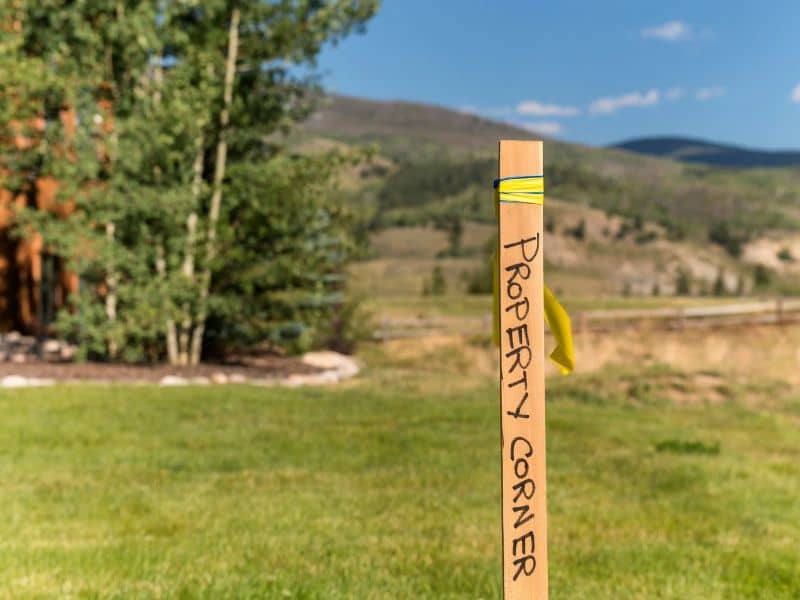
A new survey usually leaves bright flags, wooden stakes and a few metal rods around your yard. The flags and stakes won’t last long. Rain fades them and crews pull them up.
The property line markers the surveyor set or found are the part you want to keep. In College Station, crews put in fences, sprinkler lines and driveways all year. One pass with an auger or a skid steer can knock a marker loose. If you record each marker, keep work away from it and call the surveyor when one moves, your survey stays useful long after the crew leaves.
Record Each Property Line Marker Before Site Work Begins
Start a record of every marker while the survey is fresh. Walk the lot with your survey drawing in hand and match each corner on the drawing to the object on the ground. Survey drawings often note whether the surveyor found or set each marker and what type it is, such as an iron rod, an iron pipe or a concrete monument.
Take two photos of each one. The first is a close-up of the top of the rod and any cap. Many caps carry the surveying firm’s name or a license number, so a clear shot of the cap helps later. The second is a wider view that shows the marker near something that won’t move soon, like a house corner or a curb.
Keep the photos with your copy of the survey. Add a short note for each corner, like “back left, behind the shed.” When a fence builder asks where the line is, you can send the file and skip the guessing.
Protect Property Line Markers From Construction and Landscaping
Routine work near the lot line is what usually disturbs a marker. Fence augers, sprinkler trenchers and tillers all dig right where corners sit. A small loader regrading a yard can shove a rod sideways. A new flower bed can bury one under several inches of soil.
Before any crew starts, walk the line with the person in charge and point to each marker. Ask them to set posts and park equipment well clear of it. Ask them to stop and tell you if they hit one, and to leave it for you to report.
Soil adds its own pressure here. Parts of the College Station area sit on clay that swells when it’s wet and shrinks when it dries. That seasonal movement, plus new sod or fill, can shift the ground around a marker or hide it from view. Call 811 before anyone digs. Utility paint and survey markers are separate things, and a crew needs to respect both.
Make Markers Easier to Find Without Moving Them
You can make a marker easier to spot and still leave it untouched. Set a wooden stake or a strip of colored lath just beside it. A small ring of marking paint on the ground works well. So does a short wire flag placed next to the marker.
Leave the marker itself alone. Don’t pull a rod up to make it taller, and don’t cut it down or pour concrete around it. If grass has grown over the top, clear just enough to see the cap. Any change to its height or position can raise doubts about whether it still sits where the surveyor put it.
Treat the helper stake as a pointer. It shows where to look. Anyone laying out a fence or a slab should measure from the marker and the survey, and never from the stake beside it.
Treat a Disturbed Marker as a Survey Issue, Not a DIY Fix
If a marker looks bent, loose or pulled out, leave it where you found it and call the surveyor who did your survey. Resetting a boundary marker is licensed survey work. In Texas, that means a Registered Professional Land Surveyor.
Pushing a rod back to where it looks right feels harmless. The trouble shows up later. A fence builder or a future surveyor may trust that rod as the true corner, and a few inches of error can carry into everything built from it.
Give the surveyor your photos and a short account of what happened. They can check the spot against the survey measurements and nearby markers, then decide whether to reset it. If you share the corner with a neighbor, tell them as well, since their lot uses the same point.
Recheck Critical Markers Before the Next Project Starts
Markers can change between one project and the next, even when nobody meant to touch them. Before new work near the line, walk the corners with your photos and compare. A quick check tells you whether you can still rely on what’s there.
Ask your surveyor to take a closer look in situations like these:
- You plan a fence, wall, pool or addition close to the property line.
- Heavy equipment has worked near a corner since the survey.
- A marker leans or looks different from your photos.
- Grading or new fill has changed the ground near a corner.
For a small job well away from the line, your photos and a quick look may be enough. For anything built right up against it, ask whether the markers need a check or whether the job calls for fresh layout stakes. A phone call before work starts is far easier than moving a finished fence.
Frequently Asked Questions
Are survey flags the same as property line markers?
Usually not. Crews often tie bright flags or set wooden lath during fieldwork so people can spot an area quickly. The boundary monument tends to be a sturdier object, like a metal rod or pipe. If the two are hard to tell apart, your survey drawing and a short call to the surveyor will settle it.
Should property line markers remain visible above the ground?
They don’t have to. Texas surveying rules call for monuments that are stable and reasonably permanent. Depending on the spot, a surveyor may leave one flush with the ground or slightly below it. If you can’t find one, ask the surveyor before you dig a wide hole.
Can I use a metal detector to find a property corner?
It can point you toward buried metal near a corner. A beep only tells you metal is there, though. It could be a nail or a scrap of old fence wire. Whether an object marks your corner depends on the survey records, the measurements and a surveyor’s judgment.